Dryer Vent Cleaning Done Right West Palm Beach
Looking for expert West Palm Beach dryer vent cleaning technicians? We ensure safe, code‑compliant airflow using HEPA‑contained extraction, rotary brushing, and instrumented verification. You'll experience reduced drying times, lower fire risk, and protected indoor air quality in our coastal humidity. We carefully examine run length, elbows, materials, and termination per NFPA 211/IMC, then log pre/post CFM, static pressure, temperature rise, and photos. We resolve crushed flex, reinforce joints with UL foil tape, and verify damper function. See how we deliver measurable improvements right away.
Core Insights
- Licensed dryer vent technicians operating in West Palm Beach, improving safety from fires, indoor air quality, and power efficiency per NFPA 211 and manufacturing guidelines.
- Comprehensive cleaning: featuring HEPA negative-pressure capture, rotary brushing, termination hood cleaning, and UL-2158A certified repairs and sealing.
- Complete system analysis including airflow and static pressure assessments, temperature rise verification, and amperage monitoring; accompanied by before and after imagery and comprehensive measurement data.
- Quick response needed for signs of trouble: extended drying times, overheated appliance housings, strange odors, weak exterior ventilation, or triggered thermal fuses.
- Coastal-focused options that address moisture-related issues and corrosion concerns; providing complete maintenance programs for houses, homeowner associations, and commercial properties.
The Importance of Dryer Vent Cleaning in West Palm Beach
Because lint buildup is a primary cause of residential fires, periodic dryer vent cleaning in West Palm Beach is an essential safety measure that minimizes fire danger, improves airflow, and keeps equipment compliance with manufacturer and NFPA 211/CSA C22.1 guidance. You'll also safeguard wiring, terminations, and junction ducts from thermal strain and backpressure. By removing obstructions, you restore design static pressure, enhance exhaust velocity, and reduce cycle times, boosting energy efficiency and prolonging motor life.
In regions with coastal and high-humidity climates, maintaining appropriate humidity levels in your laundry area is crucial. Well-maintained vents effectively expel humid air, reducing the risk of moisture damage, mold development, and metal corrosion. Professional duct cleaning services verify appropriate duct system standards, including properly constructed metal walls, sealed connections, and proper termination clearances, while confirming precise gas and electrical connections and damper operation. You'll achieve year-round safety and compliance with regulations.
Warning Signs Your Dryer Vent Requires Immediate Service
When your dryer shows signs of heat stress, airflow problems, or electrical/gas issues, treat these as warning signs that demand quick action. If the unit's cabinet or door feels unusually hot, this may indicate a blocked exhaust duct. Prolonged drying times indicate diminished air movement and pressure concerns in the vent configuration. The presence of musty odors suggests moisture buildup from poor exhaust flow. The appearance of lint near the exterior vent, backdraft damper stuck in position, or compromised duct work all signal flow restrictions.
Look out for a weak exhaust flow at the endpoint, an activated thermal fuse, or frequent triggering on the high‑limit thermostat. Scorch marks, rattling ducts, or rattling elbows point to improper support or mounting. If you notice the gas burner short‑cycling or find erratic amperage, immediately shut down the unit and book a vent checkup.
Fire Safety and Indoor Air Quality Benefits
Even though a dryer might seem ordinary, the venting system represents a major fire risk if lint accumulates or air movement decreases. You lower fire dangers by ensuring full duct diameter, installing metal connectors, and following code-approved termination. Sufficient air movement minimizes heat accumulation, enhances smoke prevention, and reduces combustible lint buildup. Additionally, you protect residents from carbon monoxide exposure when gas dryers can vent properly and vent seals are maintained.
Properly maintained ducts improve air quality indoors. Efficient air filtration at the appliance and unobstructed exhaust support allergen removal by capturing dust, pet dander, and contaminants rather than recirculating them. Managed exhaust optimizes humidity control, limiting moisture-related issues and wall cavity condensation. Shorter cycles mean lower thermal stress, increasing fabric durability. Adhering to NFPA 211/54 clearances and UL-listed components ensures reliability and wellbeing.
Our Proven Dryer Vent Cleaning Process
The process begins with a detailed assessment and regulatory inspection to detect ventilation obstructions, duct damage, and exhaust issues. Following this, we execute controlled lint and debris removal using proper agitation and negative-pressure collection to maintain containment. Lastly, we confirm outcomes using precise airflow testing and document that exhaust performance meets manufacturer and local code specifications.
Inspection and Assessment
Prior to starting any work, our technicians perform a detailed inspection and regulatory compliance check to document baseline conditions and identify potential hazards. We initiate with a careful examination of the coupling hose, vent pathway, termination hood, and distances to ensure UL-listed components, proper routing, and secure connections. We check duct type, length, and equivalent elbows against manufacturer specifications and Florida Building Code requirements.
We measure static pressure, airflow, and backdraft damper functionality to detect restrictions or venting issues. We conduct moisture testing at the lint trap, connection points, and exterior cap to spot condensation issues or damaged ductwork. We verify combustion air intake, exhaust spacing, and electrical bonding. You'll receive comprehensive reports, safety recommendations, and compliance guidance before proceeding with service.
Removing Lint and Debris
With baseline conditions documented, we proceed straight into lint and debris removal using approaches customized to your dryer vent's characteristics. We initially ensure power isolation, protect the appliance, and connect high-efficiency HEPA vacuum to maintain negative pressure. You'll see us utilize specialized rotating brushes or air-whip agitation matched to the duct diameter, effectively removing compacted dryer lint and vent debris without stressing fittings or flexible sections.
We begin from termination to the appliance, meticulously clearing connectors, seams, and elbows, then vacuuming with antistatic equipment to prevent material re-entry. We package and record all removed material for your documentation. We maintain the termination hood, damper, and bird screen, maintaining smooth functionality. Lastly, we verify and adjust the clamps, check all set screws, and substitute any unsuitable plastic or foil connections with UL-2158A listed parts.
Airflow Testing and Verification
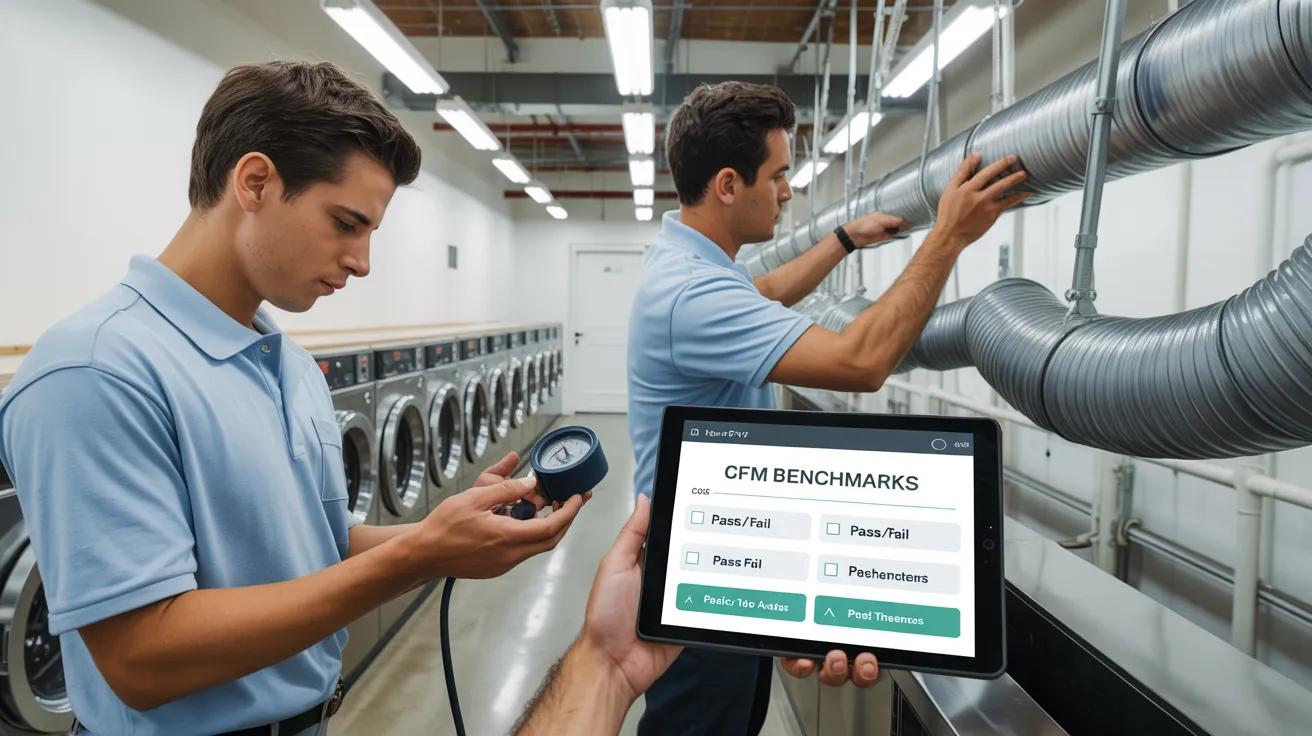
Verify performance with instrumented airflow measurement. Following debris removal, you should verify system effectiveness by employing calibrated testing equipment including hygrometers, anemometers, and manometers. Establish baseline measurements at the exterior outlet with the dryer running and properly connected on a timed cycle. Measure and document system pressure, air velocity, and flow volume. Cross-reference the readings against manufacturer specifications and ACCA/ASHRAE requirements to ensure safe function.
Carry out pressure mapping at accessible points including the appliance collar, connector hose, inline fittings, and exterior hood. Identify unusual pressure reductions that suggest residual restriction, damaged flex, or backdraft damper failure. Confirm that exhaust velocity effectively removes lint without exceeding code limits for flex duct.
Record temperature and humidity measurements to provide context for performance results. Should targets fall short, implement appropriate corrective measures. Complete the process by attaching testing information to service records for future reference and compliance requirements.
Sophisticated Tools and Approaches We Utilize
While each home is distinct, we employ a standardized toolkit to thoroughly clean vents and meet code. You get a detailed procedure that emphasizes fire safety and optimal air circulation. We begin with robotic inspection to document the entire duct network, confirm elbows, and identify constrictions without dismantling finishes. Next, we implement thermal imaging to detect hidden heat variations revealing lint accumulation, compressed flex, or loose joints.
We utilize rotating brush mechanisms sized according to duct diameter, then remove particulates using HEPA-filtered negative pressure to prevent indoor re-entrainment. When regulations allow, we implement adaptable whip attachments for fragile sections and nylon extensions for metal ductwork. We track motor amperage, inspect backdraft damper functionality, and reinforce joints with UL-listed foil tape, instead of conventional duct tape, delivering long-lasting, code-compliant outcomes.
Professional Services for Residential and Commercial Properties
You receive specialized residential solutions that align with equipment specifications and duct parameters while following NFPA 211 and manufacturer standards. For multi-unit dwellings, we handle entry coordination, log results, and comply with HOA bylaws and local fire code to ensure shared shafts and booster fans properly maintained. Companies benefit from industry-standard maintenance services with periodic cleaning, airflow benchmarking, and detailed reports to fulfill OSHA standards and AHJ reviews.
Custom Home Solutions
Developed particularly for diverse living settings, our customized residential dryer vent services address the specific code requirements, ventilation requirements, and maintenance requirements present in single-family homes, condos, townhomes, and mixed-use properties. We initiate with a thorough assessment aligned with NFPA 211 and IRC guidelines, analyzing key elements such as ductwork, bends, exits, and construction materials. Then, we eliminate lint and obstructions using professional rotary brushing and HEPA-contained negative pressure to restore design CFM and static pressure targets.
We maximize energy efficiency by inspecting vent run geometry, addressing crushed flex, taping joints with UL-listed foil tape, and adjusting proper backdraft damper tension. We provide documentation: pre/post airflow, amp draw, temperature rise, and photos. Given West Palm Beach humidity, we advise seasonal scheduling ahead of peak dryer use, guaranteeing efficient performance, quicker drying cycles, and extended equipment life.
HOA Compliance Requirements
Due to the risk concentration in multi-unit properties, our condo association compliance program coordinates dryer vent operations with industry standards including NFPA 211, NEC, and International Building Codes, plus your bylaws and insurance requirements. We implement consistent service parameters, entry procedures, and record-keeping to satisfy association requirements while minimizing resident impact.
We start with compliance audits of building vents and unit ductwork, checking material type, run length, termination, backdraft dampers, and makeup air. You'll receive deficiency lists prioritized by hazard, photo evidence, and remediation strategies. Our specialists remove blockages, replace non-compliant flexible materials, secure junctions using approved materials, and establish maintenance schedules according to usage and debris accumulation.
Our system timestamps every report, track and monitor unit participation, and deliver comprehensive service verification for insurers, boards, and fire inspectors.
Business-Grade Maintenance Plans
As fire hazards increase with lint accumulation and operating time, our commercial-grade maintenance solutions establish dryer vent maintenance for houses, apartments, and commercial spaces under the same code-compliant framework. You'll receive NFPA 211/54-aligned inspections, airflow measurements, and recorded cleaning intervals matched to facility use and occupancy levels.
We implement preventive maintenance contracts that define scope, frequency, and response SLAs, protecting you here from system failures and regulatory issues. Our experienced technicians examine proper duct materials, connections, and damper operations, then assess pressure levels and air flow to confirm design performance. We eliminate impediments, reseal joints, optimize system distribution, and swap flexible ducts with metal ones as needed.
You will receive detailed time-stamped documentation, before and after measurements, and intervention records-vital proof for insurance requirements, Authority Having Jurisdiction reviews, and administrative assessments.
Recommended Frequency for Dryer Vent Maintenance
You should to schedule professional dryer vent cleaning every 12 months, or sooner if your dryer sees heavy use (multiple loads daily), your vent configuration is complicated, or you notice red flags like increased drying duration, excessive lint, or the smell of burning. In West Palm Beach's humid climate, lint typically will trap humidity, stick to duct walls, and limit air circulation sooner, so remember to follow annual maintenance guidelines. Consider frequency based on usage: quarterly for high-volume users or large homes; semiannual for average households; annual for standard residential use.
Schedule periodic maintenance reminders at the onset of hurricane and winter dryer seasons to verify airflow performance, vent flap operation, and transition duct integrity. Be sure to check external ventilation gaps, bird guard status, and ensure that air circulation complies with specified airflow standards and local building codes.
Transparent Pricing and What's Included
Once your service interval is established, you'll understand precisely what the cost covers. You receive detailed quotes prior to starting, with parameters based on vent length, wall or roof exit points, and code compliance factors. Our service includes automated cleaning methods, HEPA-contained extraction, fan system evaluation, flow rate testing (pre/post CFM), and exit point cleaning. Where required, we note protective guard updates and approved connector modifications.
Select from flat rate options for standard single-run systems, or choose service packages combining airflow balancing, cleaning, and lint alarm setup. We maintain detailed records with photos, static pressure readings, and NFPA 211/IMC compliance notes. Our detailed invoices list materials, labor, access charges, and applicable roof-safety fees. Zero hidden charges - any extra services (rerouting, repairs, or remediation) demands your written approval prior to starting.
Real Customer Stories and Local Testimonials
Since outcomes matter more than guarantees, our customers report concrete results: improved drying efficiency, verified CFM increases, and post-clean static pressure returning to code-acceptable ranges. In Client feedback, you'll discover measured results: 30-50% reduction in cycle times, ventilation systems adjusted to original specifications, and lint loads reduced to safe thresholds. You benefit from NFPA 211-aligned methods, UL-listed components, and proven flow rate increases.
We've achieved significant progress with apartment complexes in West Palm Beach successfully passing HOA safety inspections after remediation of damaged flex runs and incorrect terminations. Professional evaluators note a decrease in dryer-fire dangers where we've corrected extended duct resistance and restored backdraft damper operation. You'll receive before/after meter readings, photos, and maintenance intervals. This detailed reporting assists you with filter changes, manage energy consumption, and ensure code compliance.
FAQs
Are All Your Technicians Licensed, Insured, and Vetted?
Absolutely. We provide qualified technicians who follow state and local codes, maintain current certifications, and follow manufacturer specifications. We carry full liability and workers' compensation insurance for your protection. We perform thorough background checks and continuous safety training, covering lockout/tagout, confined space awareness, and NFPA 211/IMC compliance. We record procedures, confirm clearances, and assess airflow and termination integrity. You can expect comprehensive reporting, chain-of-custody for keys, and visually documented results.
Are Same-Day and Emergency Dryer Vent Services Available?
Absolutely, we accommodate urgent dryer vent service. We prioritize hazardous situations, vent blockages, and excessive heat problems with priority scheduling and same day pickups. We provide a thorough assessment, performance checks, and debris clearing to factory specifications. We check ventilation components, vent terminations, and spacing requirements, while maintaining records. You'll get comprehensive reporting, visual documentation, and corrective recommendations, with service guarantee and final testing.
Can You Service Rooftop or Hard-To-Reach Exhaust Terminations?
Indeed, we handle rooftop or hard-to-reach exhaust terminations. You get technicians trained for rooftop access, fall protection, and confined-space protocols. We deploy industry-standard safety measures and stabilization equipment. We check termination caps, backdraft dampers, bird guards, and clearances. We apply rotary brushing, HEPA vacuums, and camera inspections to ensure full airflow. You'll obtain detailed compliance records, imaging, and performance data. When necessary, we replace damaged caps and seal penetrations to factory specifications.
Does Dryer Cleaning Impact the Manufacturer's Warranty?
Regular cleaning maintenance won't void your dryer's warranty. Consider this scenario: when you schedule yearly vent maintenance, your service professional clears accumulated lint, optimizes airflow, verifies temperature levels, and provides code-compliant documentation. Maintaining these service records validates warranty claims through proof of proper care. Be sure to hire qualified technicians who adhere to NFPA 211 standards and factory specifications, don't allow improper dismantling, and maintain complete documentation through pictures and payment records. Technicians will note any pre-existing issues before work begins to safeguard your warranty.
Are Before-And-After Airflow and Lint Volume Reports Available?
Indeed. We provide comprehensive airflow measurements and a lint collection analysis upon completion. We record pre- and post-cleaning CFM measurements (CFM) using specialized testing devices and note static pressure changes. For lint analysis, we measure volume and weight, detect combustible buildup, and photograph findings. Our analysis details vent path conditions, code-compliance observations, and safety recommendations. You'll see clear, documented improvement data to assist with maintenance planning and documentation for insurance and property management.
Wrapping Up
Your commitment to safety, efficiency, and code compliance matches ours - and so do we. Dryer lint is highly combustible; the U.S. Fire Administration documents nearly 2,900 dryer fires each year, with the majority originating in clogged vents. Imagine a vent stuffed like a felt blanket restricting airflow and leading to dangerous temperature increases. Professional cleaning will lower fire hazards, upgrade IAQ, and meet manufacturer and NFPA 211 standards. Be sure to schedule periodic service, document findings, and verify airflow and termination. You'll be able to protect your property, reduce energy usage, and ensure your system operates within specifications.